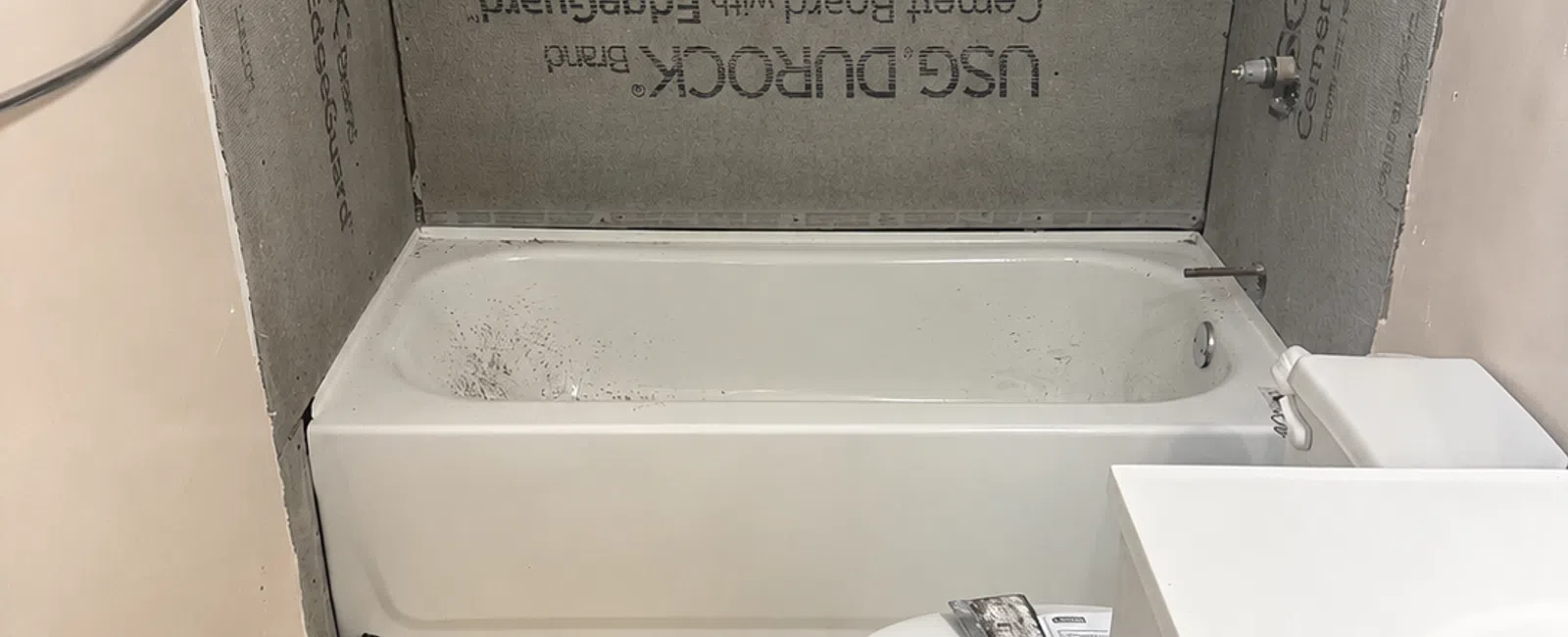
It depends on how much of the room is changing. A shower pan repair usually takes one to two days, and new flooring takes one to two days a room. A full remodel with a new tiled shower takes longer, because several steps have to happen in order and some of them involve waiting for materials to cure. Here's where the time goes, so you can plan around it. For how we handle the whole job, see our bathroom remodeling page.
The phases of a bathroom remodel
| Phase | What happens | What sets the pace |
|---|---|---|
| Consultation and measurements | The room is seen, measured and talked through | Scheduling the visit |
| Design and material selection | Layout, tile, vanity, fixtures and glass are chosen and ordered | Lead times on tile, vanities and glass |
| Permits | Filed when plumbing, electrical or walls are changing | Your city or county's review time |
| Demolition | Old tile, fixtures and finishes come out | The size of the room |
| Rough plumbing and electrical | Drains, valves, wiring and fans are moved or added, then inspected | Inspection scheduling |
| Repairs and prep | Damaged subfloor or framing is fixed; walls are boarded | What demolition uncovers |
| Shower pan and waterproofing | The pan is built and the waterproofing goes on | Cure times |
| Tile | Floor and wall tile are set, then grouted | Tile size, pattern and amount |
| Fixtures and finish | Vanity, toilet, trim, paint and accessories | Mostly fixed |
| Glass | Shower glass is measured after tile and installed when it arrives | The fabricator's lead time |
| Final walkthrough | The finished room is checked and any small items are handled | Mostly fixed |
Why some steps can't be rushed
Much of a bathroom remodel is waiting for materials to set, and skipping that wait is how showers end up leaking.- Mortar beds and setting materials need to cure before tile or grout goes on top. Each product has a cure time on the bag, and humidity can stretch it.
- Waterproofing should be tested before tile covers it. Once tile is down, a leak in the pan means tearing the tile back out.
- Grout needs time before heavy use and sealing. The manufacturer sets how long.
- Frameless glass can't be measured until the tile is done, because it's cut to the finished walls. That adds the fabricator's lead time to the end of the job.
How the type of bathroom changes the timeline
Powder room or half bath. No shower means no pan, no waterproofing and less tile. These are the fastest remodels. See our half bath remodel page for what's involved.Hall bath with a tub. Keeping the tub where it is saves time on plumbing. Most of the schedule is the tile surround and floor.
Tub-to-shower conversion. Removing the tub, moving the drain and building a new pan add steps. Our tub-to-shower conversion page covers the process.
Primary bath. A custom shower, double vanity and more tile make this the longest job, especially with a bench, niches or stone.
What slows a bathroom remodel down
- Materials that aren't in stock. Special-order tile, custom vanities and glass are the most common delays. Choosing everything before demolition starts avoids a torn-out bathroom sitting idle.
- Damage found at demolition. Rotted subfloor, a leaking drain or old wiring is only visible once the walls and floor are open. Fixing it properly adds time.
- Permits and inspections. When plumbing or electrical is changing, the work stops until it passes inspection. Turnaround depends on your city or county. We manage the permitting process.
- Changes mid-project. Moving a niche or switching tile after work has started means reordering and redoing.
A short checklist before you start
- Decide what's changing: the layout, or the finishes only
- Pick tile, vanity, fixtures and glass before demolition
- Plan for another bathroom to use during the work
- Clear the room and the path to it
- Ask whether your project needs a permit
- Ask how damage found behind the walls will be handled